Launch offer — valid today only

📄 Digital book in PDF · read it on your phone or print it

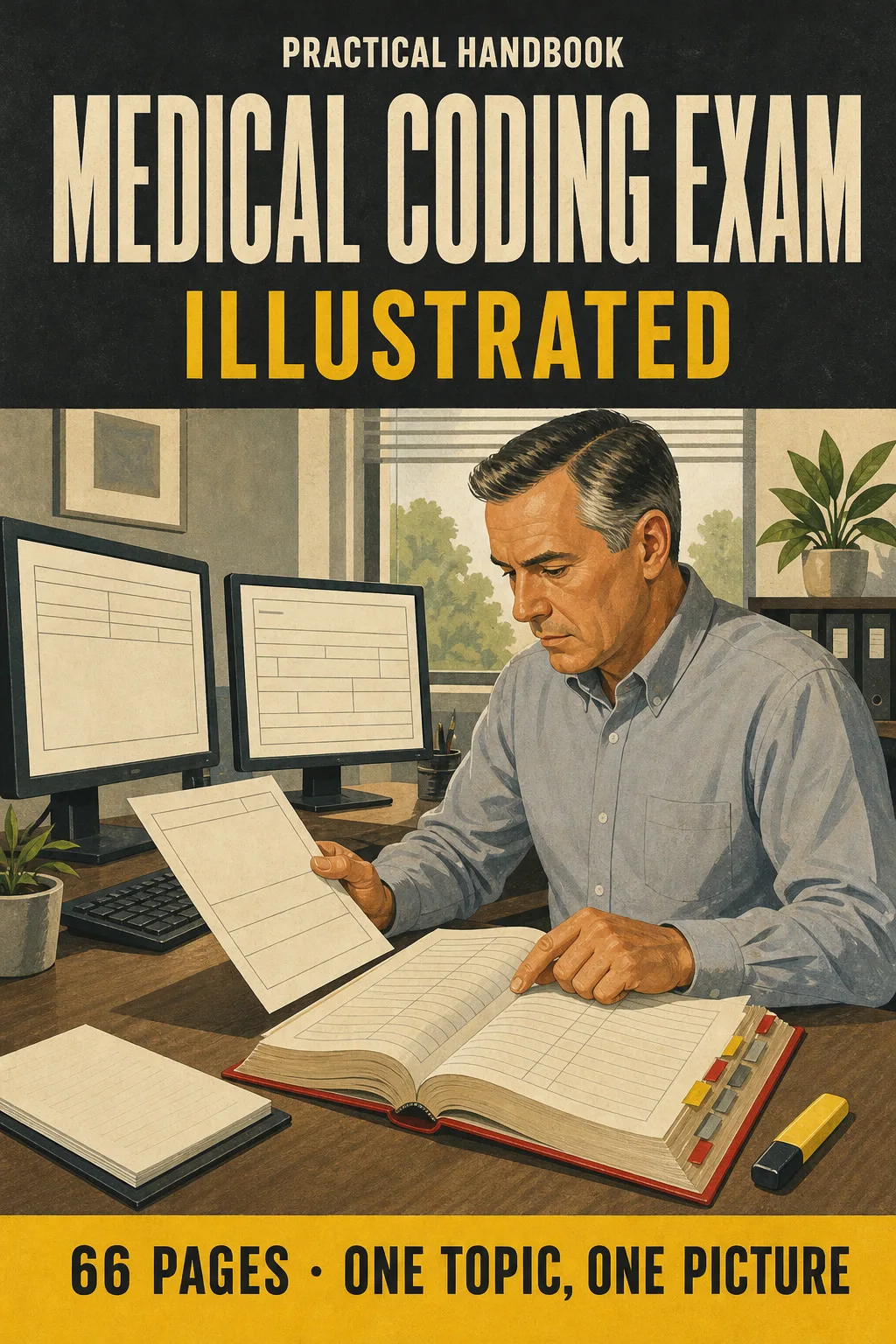
Medical Coding, Illustrated: The Coder Exam Rules, Looked Up in the Same Order Every Time One Coding Topic Per Page

The ICD-10-CM lookup, Excludes1 vs Excludes2, the 7th character, CPT sections, office visit levels, modifiers 25 and 59, the surgical package, anesthesia units and diagnosis pointers. Every topic has its own page: first the drawing, then what you need to remember. 66 illustrated pages.

YES, I WANT THE ILLUSTRATED CODING BOOK

🔒 Secure checkout · PDF by email · 30-day guarantee

Every topic, its own pageEach lookup rule drawn, with the explanation right beside it
66 illustrated pages9 parts, from the exam at a glance to the night-before checklist
Up-to-date sourcesICD-10-CM Official Guidelines, current CPT and HCPCS Level II code sets, CMS NCCI Policy Manual
PDF by emailFormat

Look Inside the Book

Every page has one big drawing and a box with the rules, ranges and steps you need to know:

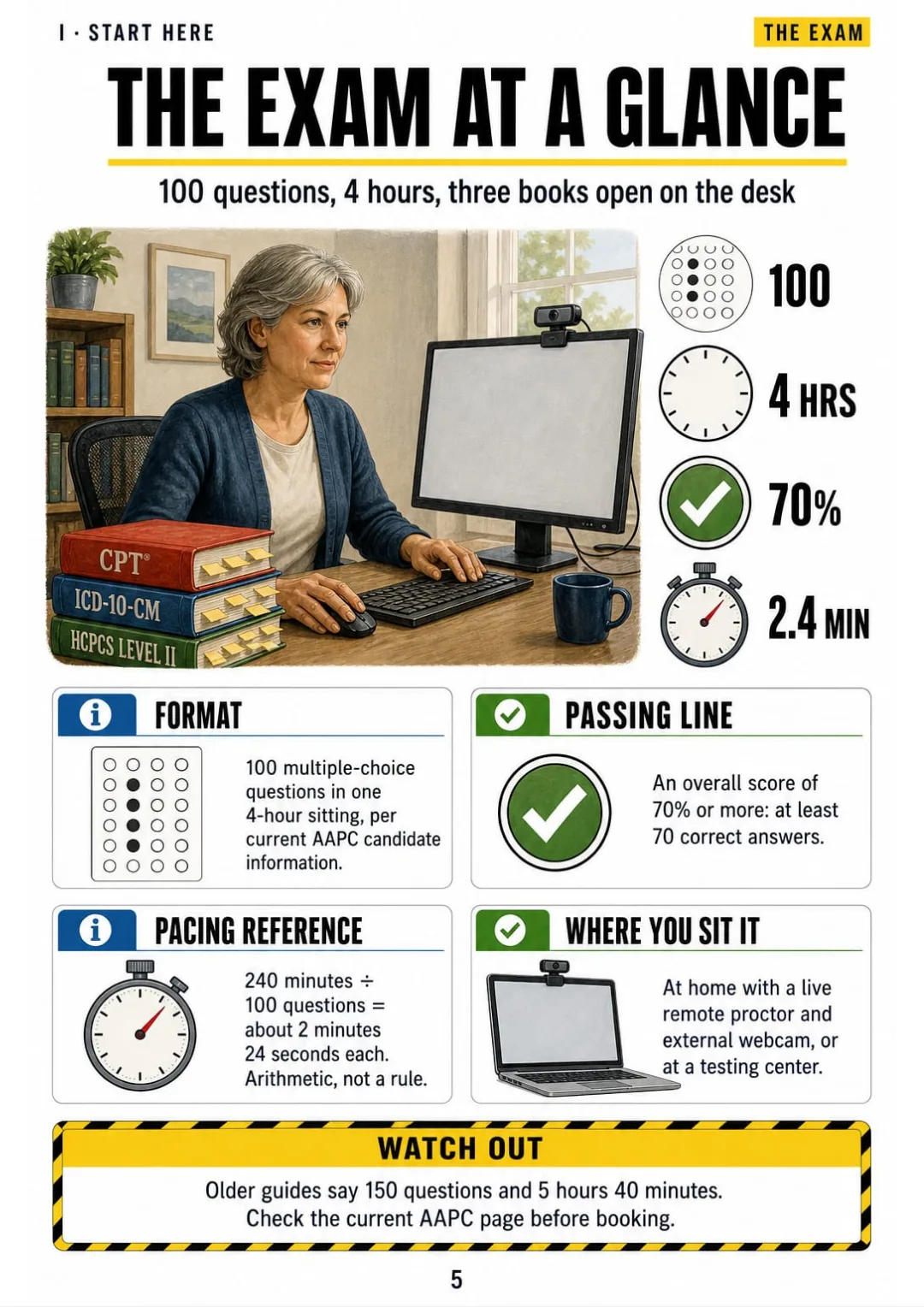
100 questions · 4 hours · 70% to pass · about 2.4 minutes per question
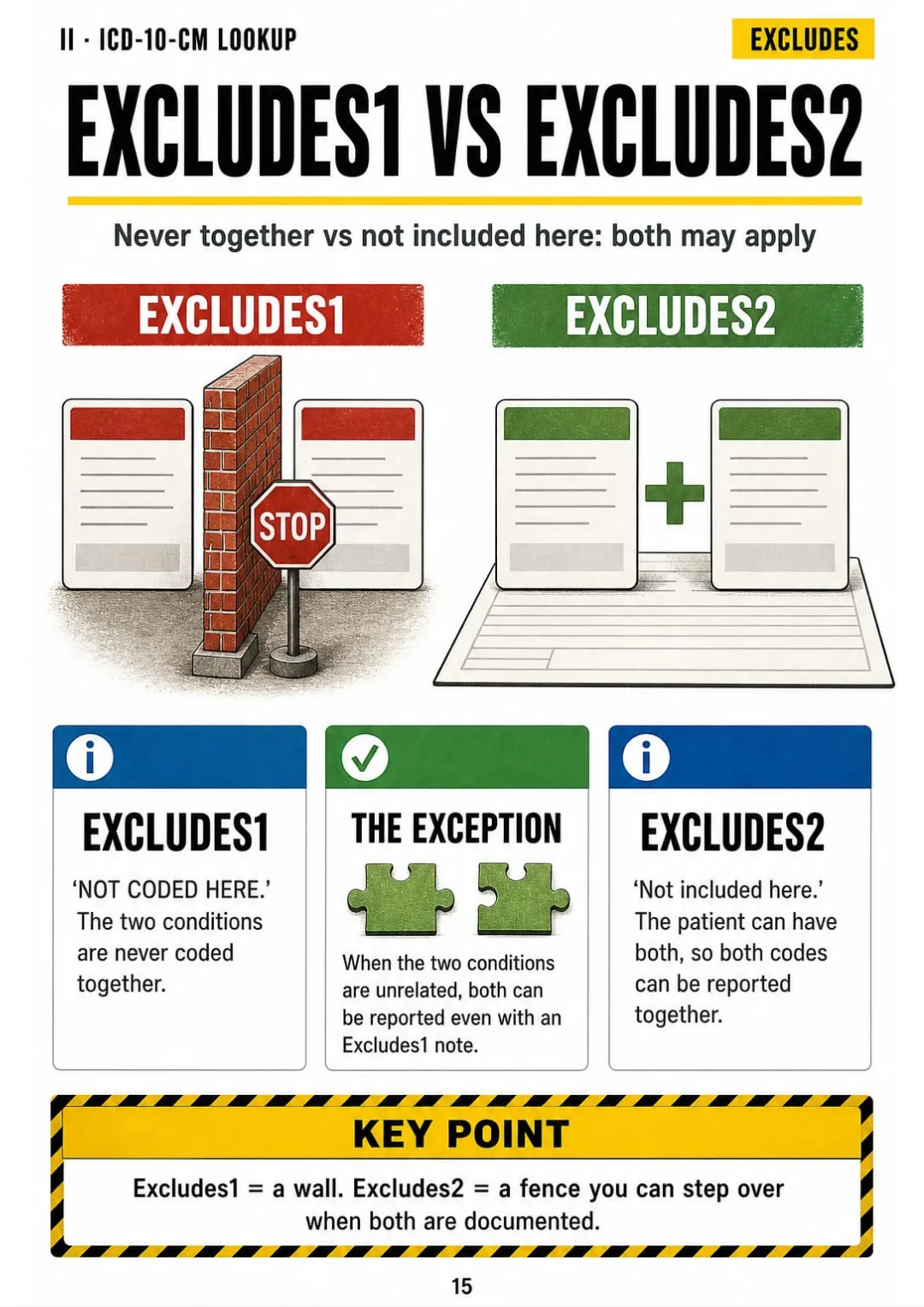
Excludes1: never together (unless unrelated) · Excludes2: both can be coded
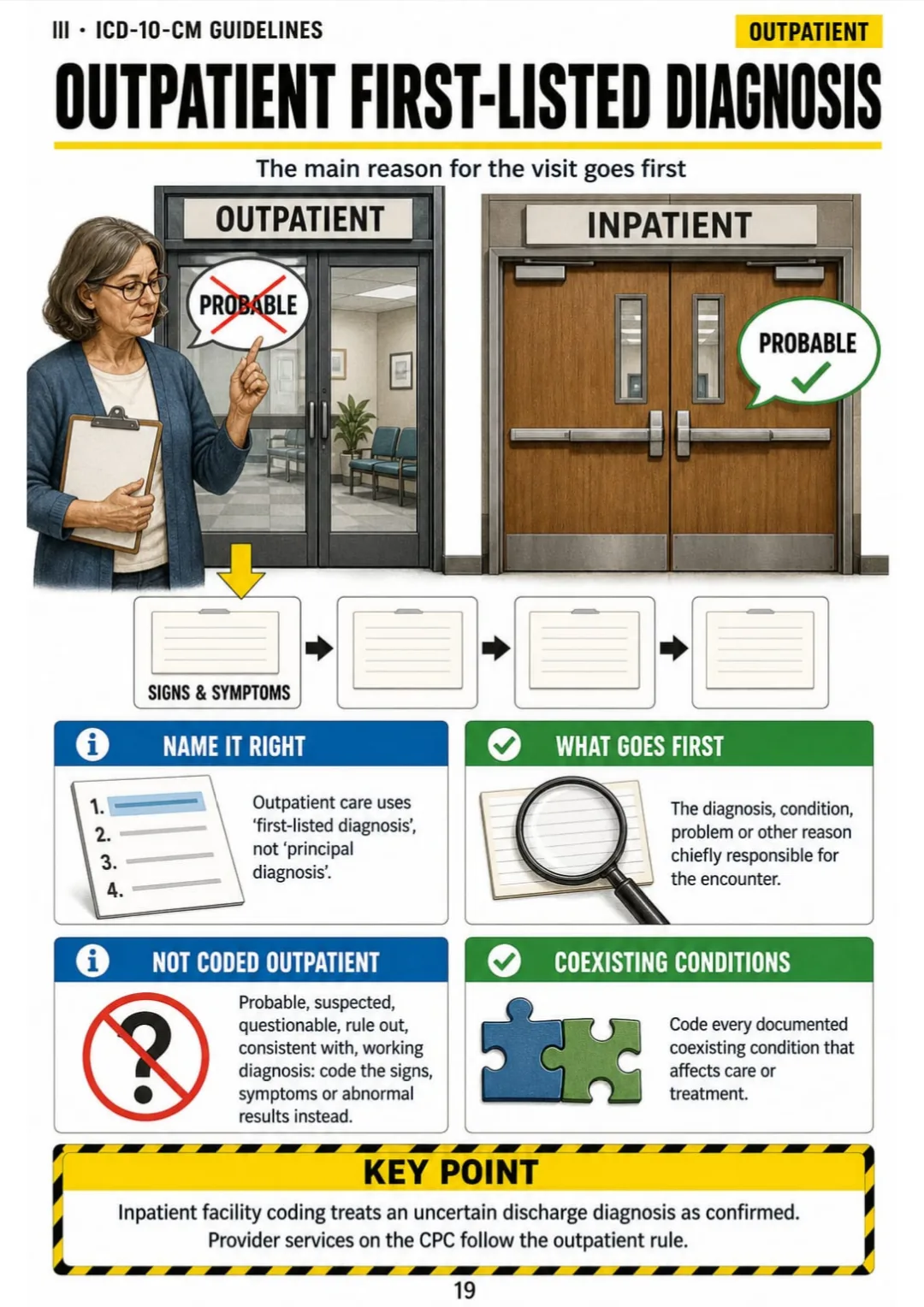
Outpatient: first-listed diagnosis, and 'rule out' is never coded
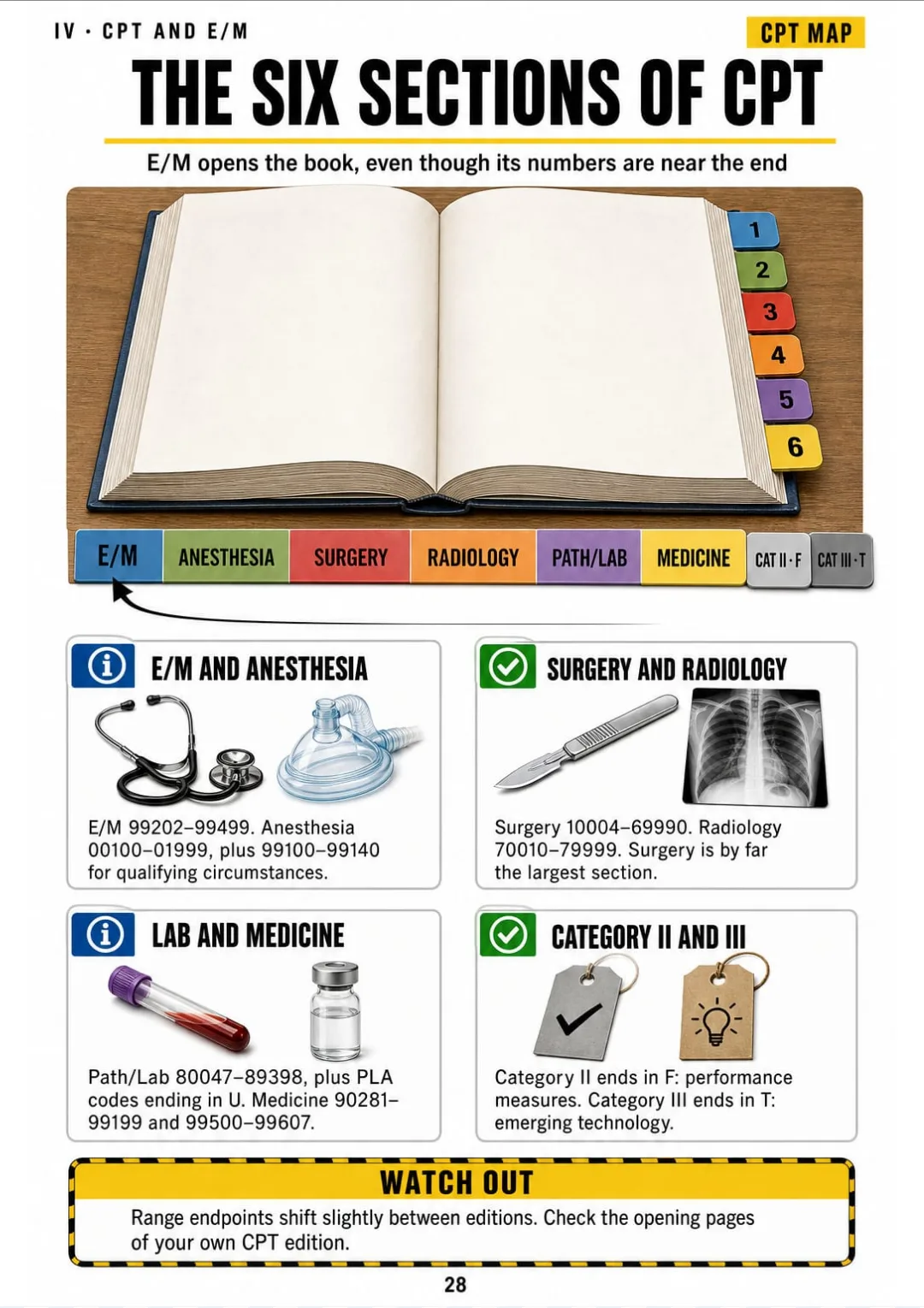
CPT's 6 sections with their ranges, plus Category II (F) and III (T)
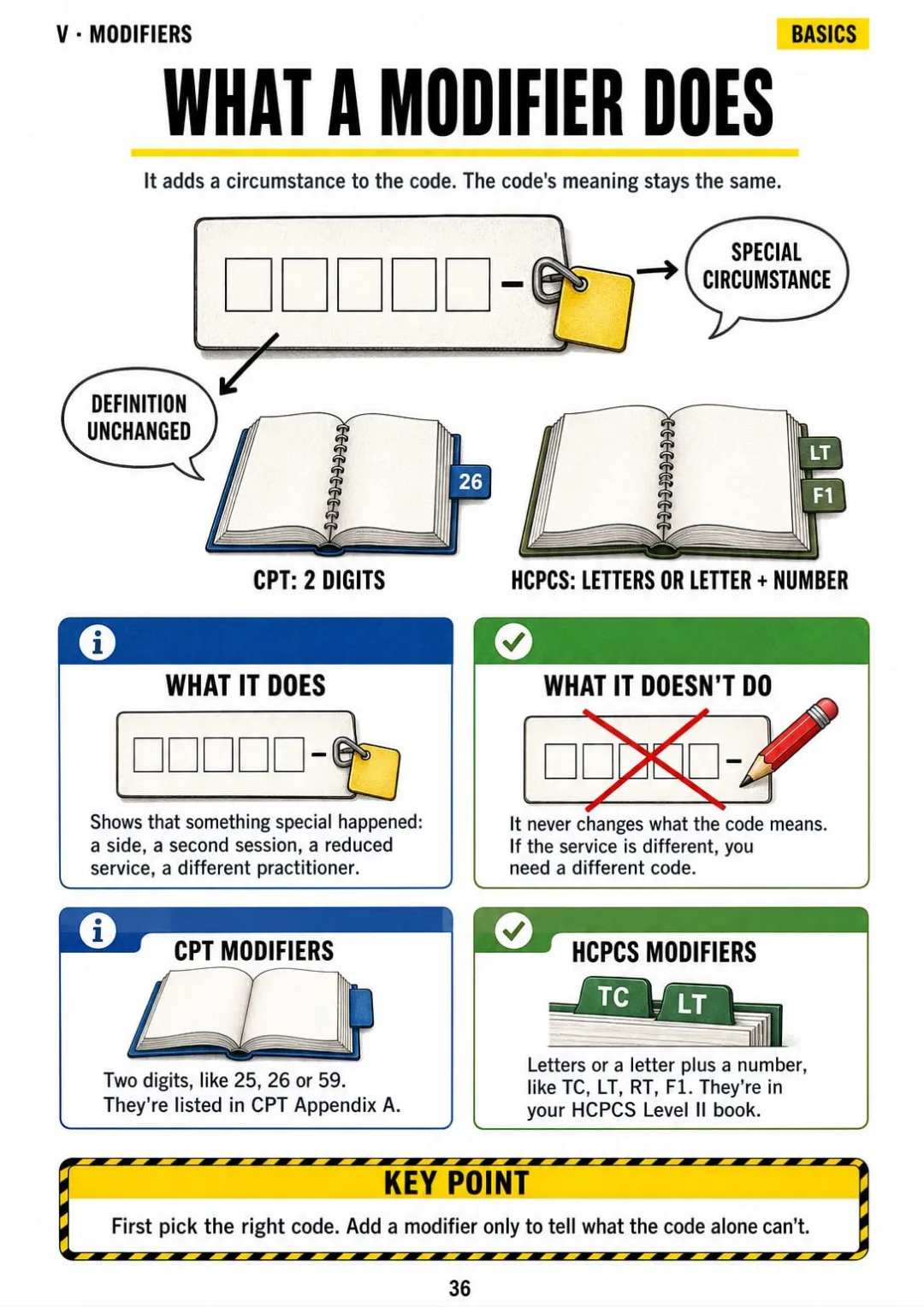
CPT modifiers are 2 digits (Appendix A). HCPCS modifiers are letters or letter + number (LT, TC, F1).
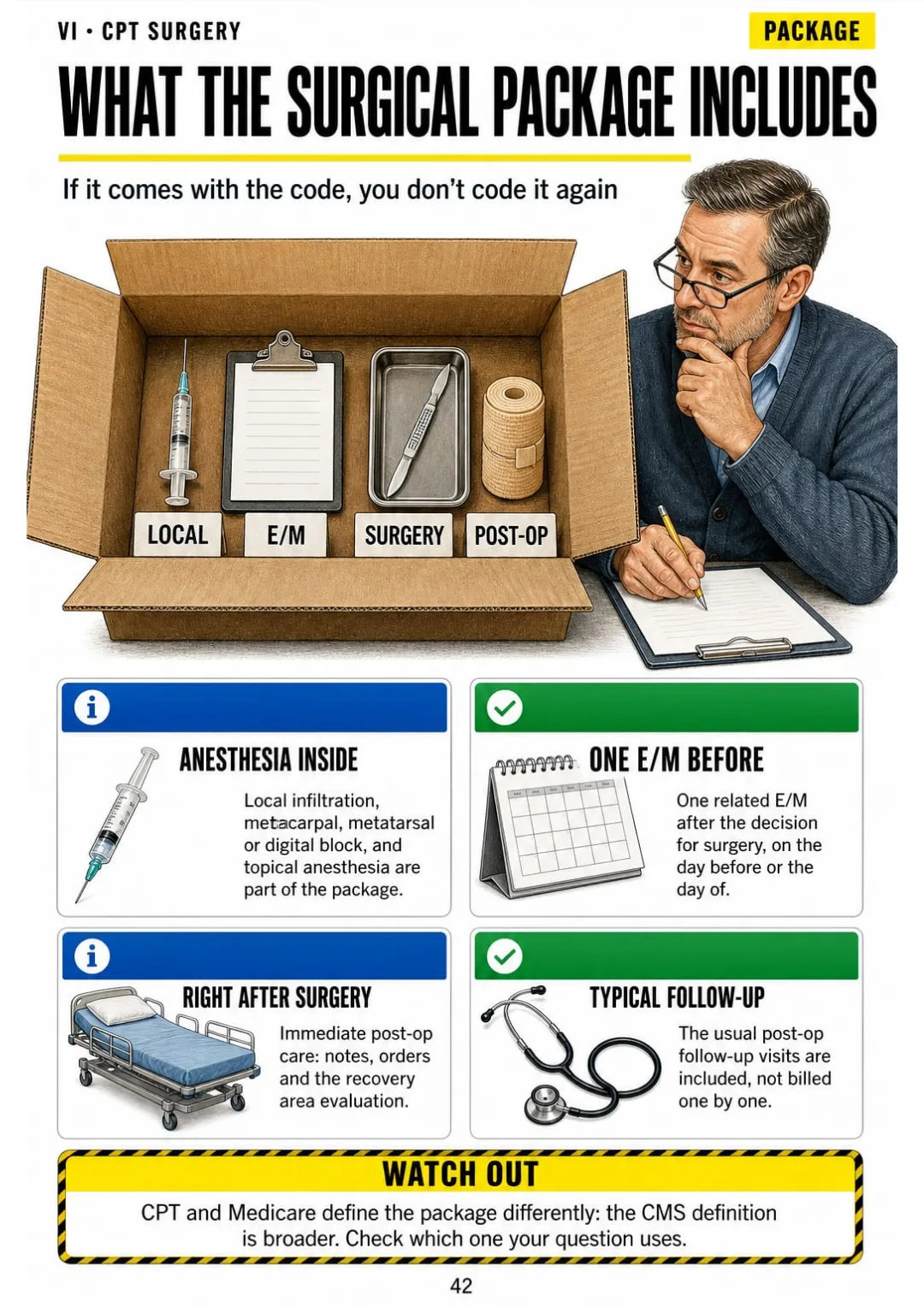
Local anesthesia, one pre-op E/M, immediate post-op care and typical follow-up: all included.
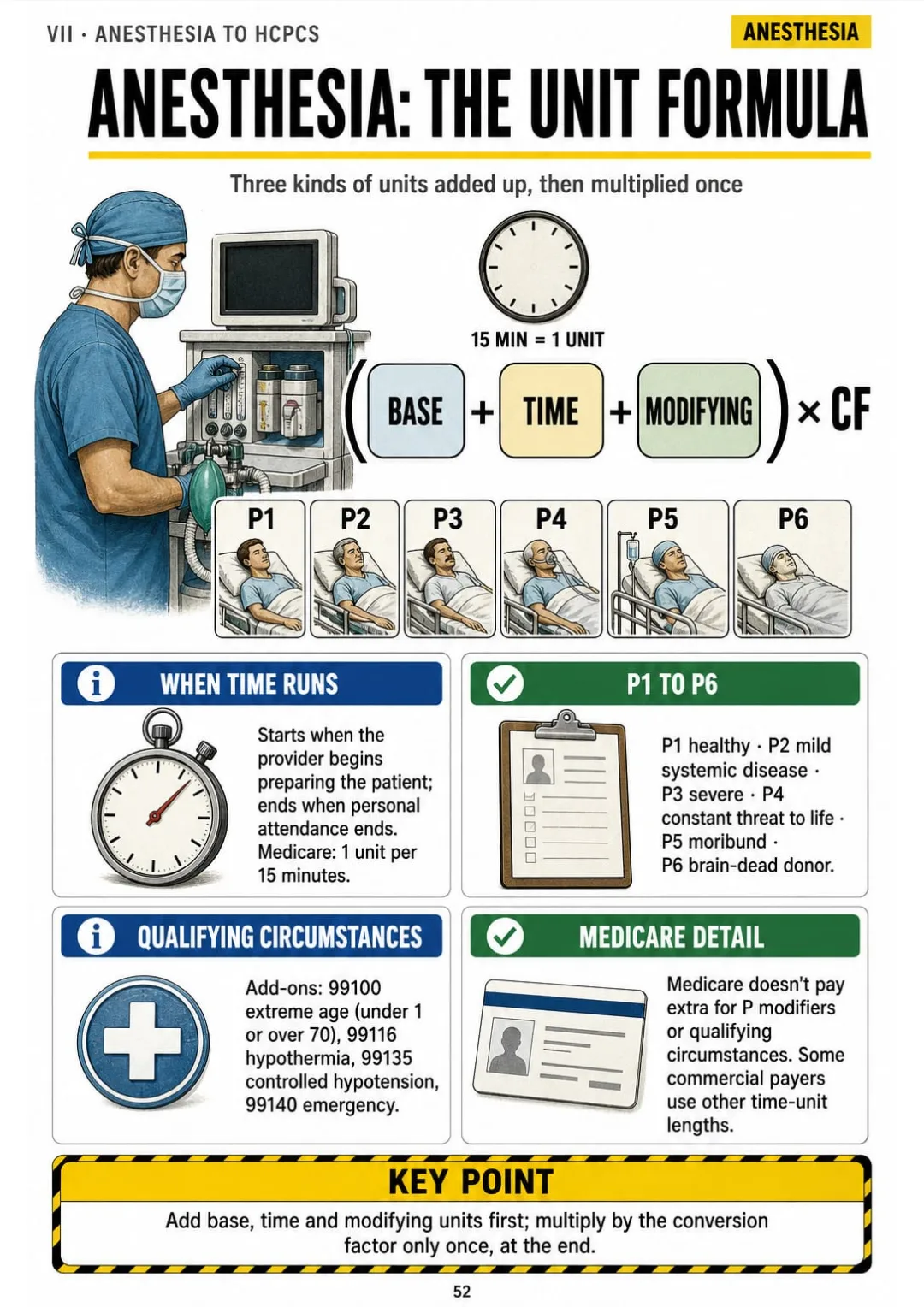
(Base + time + modifying units) × conversion factor · Medicare: 1 time unit = 15 minutes
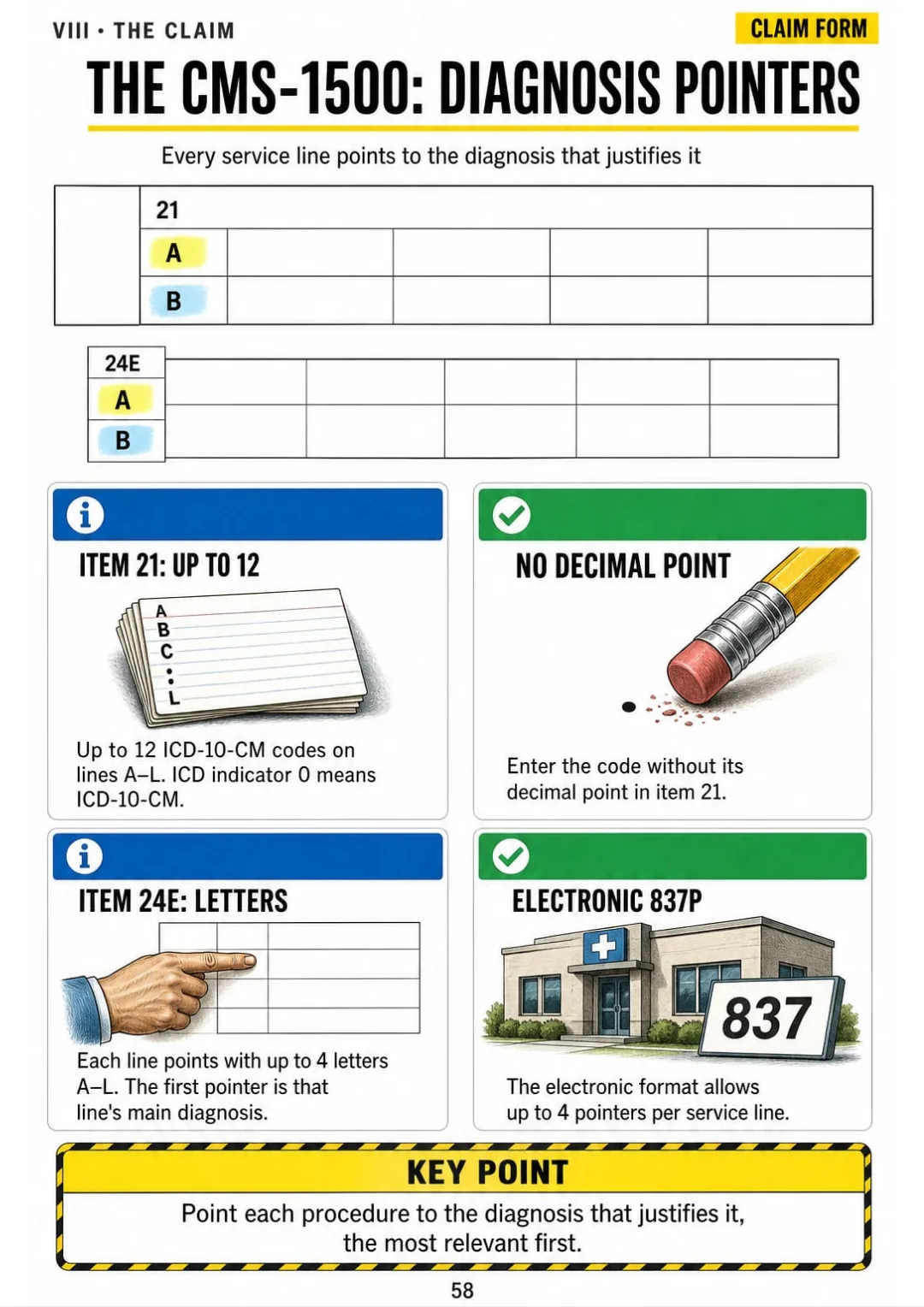
Item 21 holds up to 12 diagnoses (A–L); item 24E points each line to them, main one first.

Swipe to see more →

These are real pages from the book. The table of contents is the full one: 9 parts and 62 topics.

The Problem Isn't You. It's How It Was Explained to You.

You're looking at an outpatient note: cough, fever, and the provider wrote "rule out pneumonia." You have to pick the first-listed diagnosis, and the clock is running.

The guidelines cover this in long paragraphs about settings, uncertain diagnoses and exceptions. It made sense last night. Under pressure, outpatient and inpatient blur together, and you code the pneumonia.

Outpatient: first-listed diagnosis, and 'rule out' is never coded

In the book, that same note is one page: the outpatient visit drawn as a single path, the reason for the visit on top, and "rule out" crossed out in a red box. Outpatient: first-listed diagnosis, and "rule out" is never coded.

Other topics get the same treatment: Excludes1 vs Excludes2, the 7th character and the X placeholder, modifier 25 vs 59, the surgical package and the diagnosis pointers on the claim form.

You see why the cough and fever go first, and you code it without going back to the guidelines. Next note, same order.

COMPARE FOR YOURSELF

Same Topic, Two Ways to Study It

THIS
  • The manual: line after line after line
  • Code structure explained only in words
  • You walk into the exam with doubts
ICD-10-CM codes consist of a minimum of three and a maximum of seven alphanumeric characters. The first character is invariably alphabetic; the second is numeric, and the third may be numeric or alphabetic, the three together constituting the category. A decimal point is placed following the third character. Characters four through six provide additional specificity regarding etiology, anatomic site, severity or other clinical detail, as applicable. Where a seventh character is required but the code contains fewer than six characters, the placeholder X must be utilized to fill each empty position.
FOR THIS
  • The code structure in one drawing
  • Characters and placeholders in one box
  • You see it and you get it
Excludes1: never together (unless unrelated) · Excludes2: both can be coded
CONTENTS

Take a Look at the 9 Parts and 62 Topics

The exam and the books, the ICD-10-CM lookup and its guidelines, CPT and E/M, modifiers, surgery system by system, anesthesia to HCPCS, the claim and its rules, and exam day: 66 pages, all illustrated.

IStart Here: The Exam and the Books · pp. 5-10
  1. The Exam at a Glance
  2. Three Books, Three Questions
  3. From Visit to Claim in One Flow
  4. Medical Necessity: The Diagnosis Justifies the Procedure
  5. Break Any Medical Word in Three Parts
  6. Body Directions and Planes for Coders
IIICD-10-CM: The Lookup · pp. 11-18
  1. Anatomy of an ICD-10-CM Code
  2. The 4-Step Lookup, Always in the Same Order
  3. Find the Main Term: Condition, Not Body Part
  4. NEC, NOS and the Punctuation of the Book
  5. Excludes1 vs Excludes2, Side by Side
  6. Code First, Use Additional Code, Code Also
  7. "With" and Combination Codes
  8. The 7th Character and the X Placeholder
IIIICD-10-CM: The Guidelines You Use Most · pp. 19-27
  1. Outpatient First-Listed Diagnosis
  2. Signs and Symptoms vs a Confirmed Diagnosis
  3. Diabetes Coding Without Guessing
  4. Hypertension: The Presumed Links
  5. The Neoplasm Table, Column by Column
  6. Injuries and External Causes
  7. Poisoning, Adverse Effect, Underdosing
  8. Pregnancy Codes Go First
  9. Z Codes: Screening, History and Status
IVCPT: Structure and E/M · pp. 28-35
  1. The Six Sections of CPT and Their Ranges
  2. CPT Symbols You Must Recognize
  3. The Semicolon and Indented Codes
  4. How to Search the CPT Index
  5. New vs Established Patient
  6. Office Visit Level by Medical Decision Making
  7. Office Visit Level by Time
  8. Other E/M Categories at a Glance
VModifiers, Drawn Side by Side · pp. 36-41
  1. What a Modifier Does (and Doesn't)
  2. Modifier 25 vs Modifier 59
  3. Modifier 26 vs TC
  4. The Global Period and Modifiers 24 and 57
  5. Back to the OR: 58, 78, 79, 76 and 77
  6. 50, 51, 52, 53 and Anatomic Modifiers
VICPT Surgery, System by System · pp. 42-51
  1. What the Surgical Package Includes
  2. Lesion Excision: Measure the Right Thing
  3. Wound Repair: Simple, Intermediate, Complex
  4. Fractures: Open, Closed, With or Without Manipulation
  5. Respiratory: Endoscopy and Sinus Procedures
  6. Cardiovascular: Selective vs Nonselective Catheters
  7. Digestive: Colonoscopy Screening Turned Diagnostic
  8. Urinary and Male Genital: Start From the Cystoscope
  9. Maternity Care: The Global Package
  10. Nervous System, Eye and Ear
VIIAnesthesia, Radiology, Lab, Medicine and HCPCS · pp. 52-57
  1. Anesthesia: Base + Time + Modifying Units
  2. Radiology: Contrast, Views and Components
  3. Pathology and Lab: Panels and Specimens
  4. Medicine: Vaccines and Infusions
  5. HCPCS Level II: Letters and Units
  6. HCPCS Modifiers You Meet Often
VIIIThe Claim and the Rules Around It · pp. 58-61
  1. The CMS-1500: Diagnosis Pointers
  2. NCCI Edits: Pairs and Unit Limits
  3. Coverage: NCD, LCD and the ABN
  4. HIPAA, Fraud and Abuse
IXExam Day: Practice and Review · pp. 62-66
  1. Tab Your Books Before the Exam
  2. The 4-Hour Plan
  3. Read the Answers First, Then the Note
  4. Look-Alikes Checklist
  5. The Night-Before Checklist

One Page, One Topic, All Clear

Think of it this way:

It's well into the exam. A question gives you a note with a laceration repair, an office visit the same day, and four answers with different modifiers. You need to know right now if it's 25, 59 or neither.

In the book you open the page for modifier 25 vs 59 and see them drawn side by side: 25 goes on the office visit when it's significant and separately identifiable from the procedure that day; 59 goes on a procedure that's distinct from another procedure that day, with a chart example under each one.

CPT modifiers are 2 digits (Appendix A). HCPCS modifiers are letters or letter + number (LT, TC, F1).

Same with the 4-step lookup, the neoplasm table, office visit levels by decision making, the surgical package and NCCI edits: each one on its own page.

Medical Coding Exam Illustrated is 9 parts and 62 topics, all drawn, and it ends with the 4-hour plan, a look-alikes checklist and the night-before checklist.

What you see drawn, you don't have to memorize.

What's Inside Medical Coding Exam Illustrated:

Ipp. 5-10

Start Here: The Exam and the Books

What the exam looks like, which book answers which question, the visit-to-claim flow, medical necessity, word parts and body planes.

IIpp. 11-18

ICD-10-CM: The Lookup

How an ICD-10-CM code is built, the 4-step lookup, main terms, NEC and NOS, Excludes1 vs Excludes2, sequencing notes, "with" and the 7th character.

IIIpp. 19-27

ICD-10-CM: The Guidelines You Use Most

First-listed diagnosis, symptoms vs confirmed diagnoses, diabetes, hypertension, the neoplasm table, injuries, poisoning, pregnancy and Z codes.

IVpp. 28-35

CPT: Structure and E/M

The six CPT sections and their ranges, symbols, the semicolon, the CPT index, new vs established patients and office visit levels by decision making or time.

Vpp. 36-41

Modifiers, Drawn Side by Side

What a modifier does, 25 vs 59, 26 vs TC, the global period, return-to-OR modifiers, and 50, 51, 52, 53 plus anatomic modifiers.

VIpp. 42-51

CPT Surgery, System by System

The surgical package, lesion excision, wound repair, fractures, endoscopy, catheters, colonoscopy, cystoscopy, maternity care, nervous system, eye and ear.

VIIpp. 52-57

Anesthesia, Radiology, Lab, Medicine and HCPCS

Anesthesia units, radiology components, lab panels, vaccines and infusions, HCPCS Level II letters, units and common modifiers.

VIIIpp. 58-61

The Claim and the Rules Around It

Diagnosis pointers on the CMS-1500, NCCI pairs and unit limits, NCD, LCD and the ABN, and HIPAA, fraud and abuse.

IXpp. 62-66

Exam Day: Practice and Review

Tabbing your books, the 4-hour plan, reading the answers first, a look-alikes checklist and the night-before checklist.

At the end of the book: Worked chart examples on every coding page, a 4-hour exam plan and a look-alikes checklist.
Plus: 2 Free Books

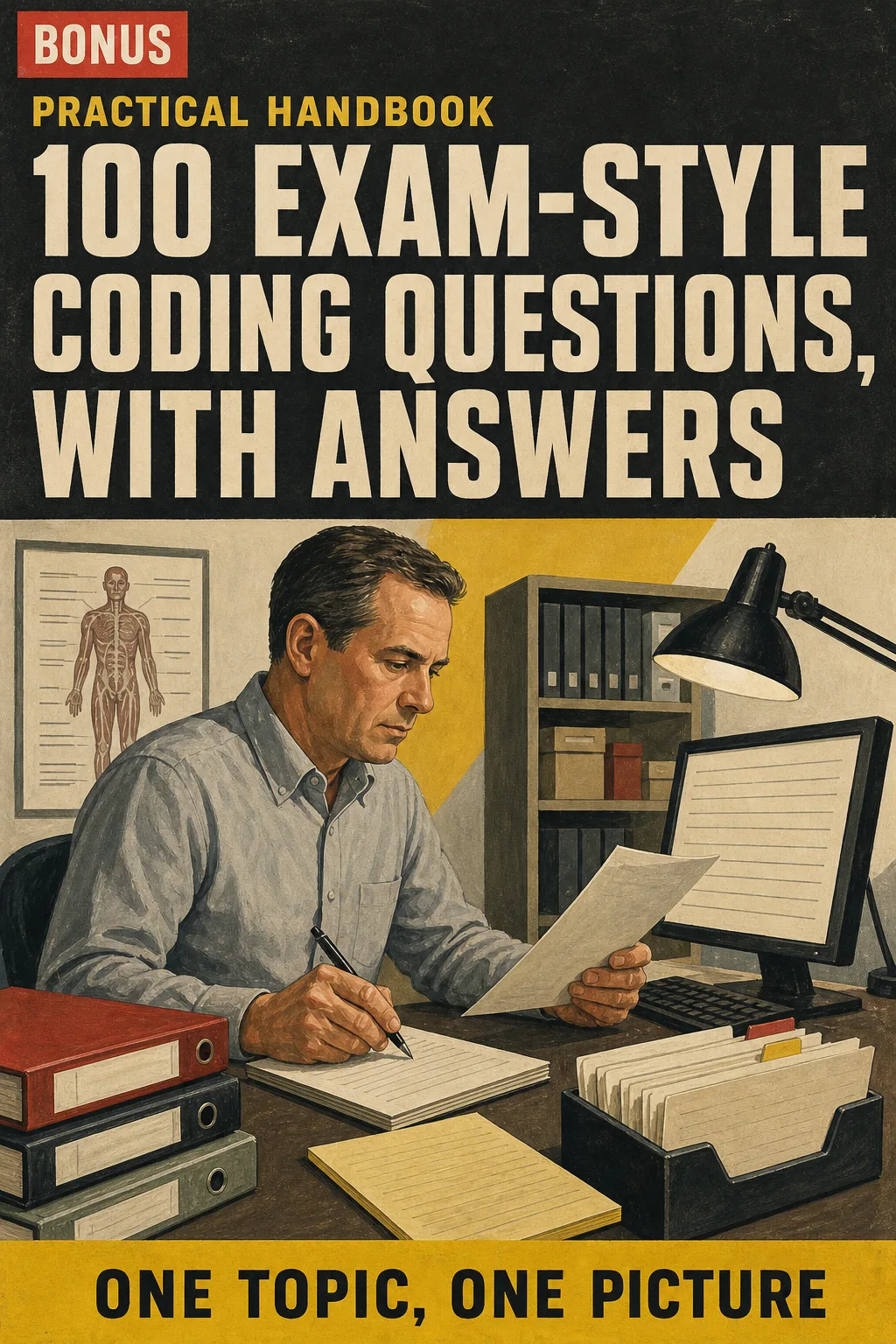
100 Exam-Style Coding Questions, with Answers

BONUS 1: «100 Exam-Style Coding Questions, with Answers»

Value on its own: US$ 17.90

Practice in the same multiple-choice style as the exam, and see why each answer is right, so you learn the lookup path instead of guessing.

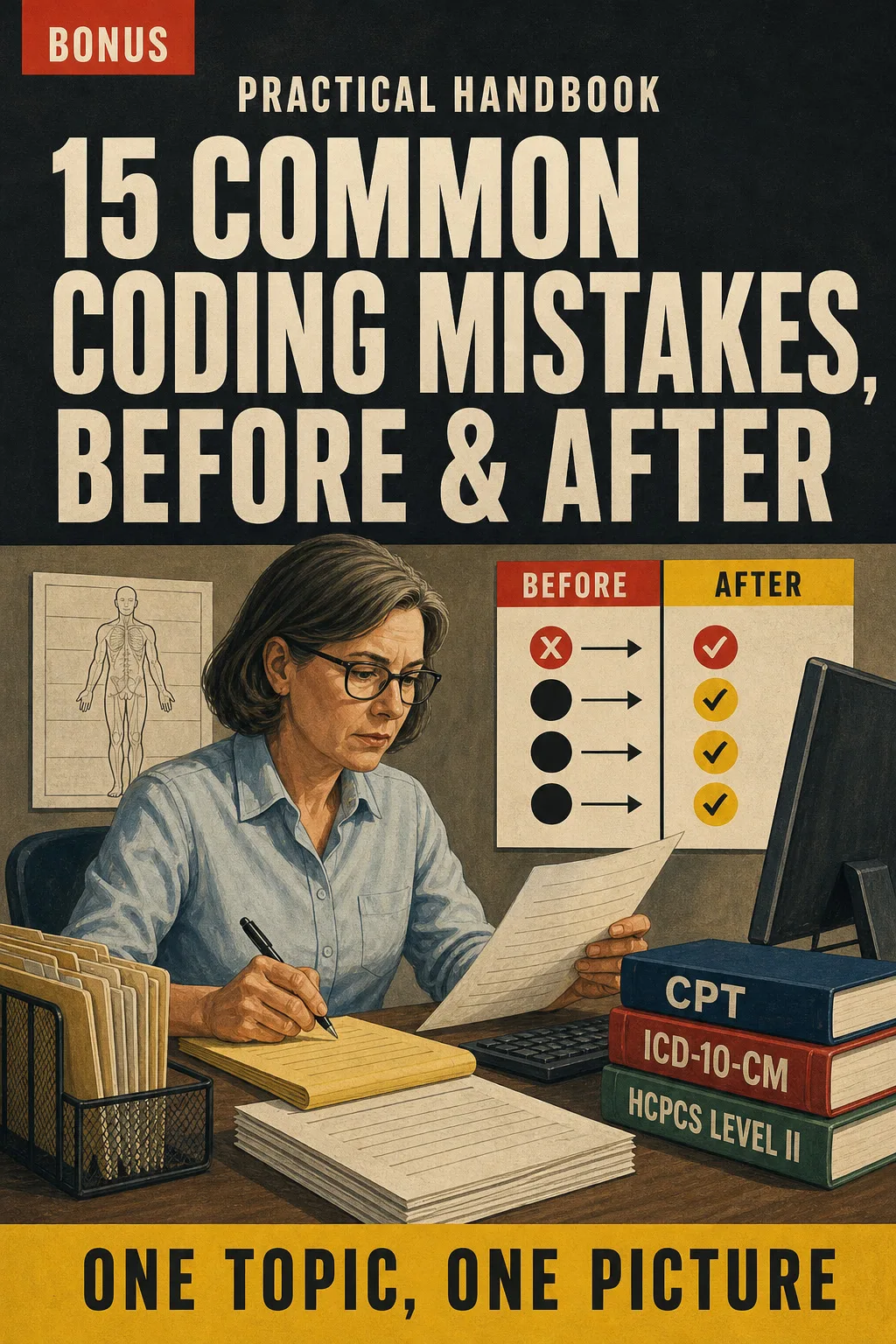
15 Common Coding Mistakes, Before & After

BONUS 2: «15 Common Coding Mistakes, Before & After»

Value on its own: US$ 14.90

See the wrong code and the right one side by side, so the errors coders make most often stop costing you points.

Medical Coding Exam Illustrated with 2 Free Books

  • Medical Coding Exam Illustrated: 66 illustrated pagesUS$ 63
  • BONUS 1: 100 Exam-Style Coding Questions, with AnswersUS$ 17.90
  • BONUS 2: 15 Common Coding Mistakes, Before & AfterUS$ 14.90
  • High-resolution PDF to printIncluded
Total value US$ 95.80
YOUR PRICE:
US$ 27
You save US$ 68.80
YES, I WANT MEDICAL CODING EXAM ILLUSTRATED FOR US$ 27

📄 This is a digital PDF book sent to your email: nothing is printed or shipped.

Secure purchaseEncrypted payment30-day guarantee

PDF by email: We email you Medical Coding Exam Illustrated as a PDF, together with the two free books. It's a single payment: no installments, no extra charges.

Who This Book Is For

You're taking a coding course

You're taking a coding course

Each lesson from your course gets one page you can see, so the guidelines stop blurring together after a long day at work.

Your exam date is set

Your exam date is set

You practice the same lookup order on every question, know where each topic lives, and walk in with a plan for the 4 hours.

You already work in billing or at the front desk

You already work in billing or at the front desk

The notes and claims you see every day become one clear flow, so you understand why each code and modifier goes where it goes.

Everything You Get Today

US$ 95.80US$ 27
YES, I WANT MEDICAL CODING EXAM ILLUSTRATED FOR US$ 27

📄 This is a digital PDF book sent to your email: nothing is printed or shipped.

30DAYS
GUARANTEE

30-Day Guarantee

Try Medical Coding Exam Illustrated for 30 days, bonus books included.

We refund everything if the file won't open, if the book isn't what you see here, if you were charged twice or if the email doesn't arrive. Just email us.

You pay once. No subscriptions.

Frequently Asked Questions

Which exam is it for, and is it for me if I'm new to coding?

It follows the professional (outpatient) coder certification exam, the CPC: 100 questions in 4 hours with ICD-10-CM, CPT and HCPCS. It starts from the exam format and the three code books and builds up to modifiers, surgery and the claim, so you can start from zero. It doesn't cover inpatient procedure coding. If you're taking a course, it works as the visual companion to it.

Is it up to date with the current exam and code books?

The rules are checked against the current ICD-10-CM Official Guidelines, the CPT and HCPCS Level II code sets and guidelines, the CMS NCCI Policy Manual and the current exam candidate handbook. The book teaches how to find, sequence and modify codes, so it works with the code book editions your exam allows; you always confirm the final code in your own current manuals. Rules are paraphrased and drawn; CPT descriptors are not reproduced.

Is this official material?

No. It's an independent study guide written for the CPC® exam: 100 multiple-choice questions, 4 hours, open book with your approved code books. It is not affiliated with or endorsed by the AMA, CMS or AAPC, and it does not give you a certificate or a credential: the certification comes only from passing the exam.

Does it replace my course or my code books?

No. It works alongside your course and your code books. On exam day you use only the manuals the exam allows.

Are the practice questions the real exam questions?

No. The 100 questions are written for this book, in a multiple-choice style, with each answer explained. They are not official exam questions.

When and how do I get it?

As a PDF by email, to the address you enter at checkout. The 2 bonus books come the same way.

Do I have to pay every month?

No. It's a one-time payment, with no subscription.

Can I have it on paper?

Yes. The PDF is made to print, at home or at a print shop, so you can keep it next to your code books.

How does the refund work?

You have 30 days. We refund everything if the file won't open, if the book isn't what you see on this page, if you were charged twice or if the email doesn't arrive: just email us.

Before You Close This Page

No more rereading guidelines that don't stick.

Modifier 25 vs 59: you see it drawn, and that's it.

You walk into the exam knowing where everything is.

Drawings make studying faster.

The book is right below.

One-time payment: US$ 27 · Guarantee: 30 days · PDF by email

YES, I WANT MEDICAL CODING EXAM ILLUSTRATED FOR US$ 27

📄 This is a digital PDF book sent to your email: nothing is printed or shipped.